Friday, August 5, 2011

The Advantages of Having An Interactive Brand Representative

From the public relations advice guru DKNY-girl to the behind the scenes fashion insider OscarPRGirl, online brand representatives are not only driving company attention but also increasing sales. By looking at two huge digital presences, the women behind social media for fashion labels DKNY (Donna Karen New York) and Oscar de la Renta, it will become evident why every company needs an individual leading the company in the interactive world.

We have discussed the benefits of social media in previous posts: Twitter, Facebook, Tumblr, Blogger, Pinterest, LinkedIn, etc. Your company may even have one of several of these accounts. However, the questions that must be asked is, are you properly utilizing each medium? Are they consistent? Additionally, who is handling these accounts? If the tone or voice on several of your mediums is different, then your message will be viewed differently on each forum. Think deep down into the core of your business, what are you trying to provide your consumer? What good or service sets you apart from the competition in your given industry? Once you decide what message you are trying to promote to your target market, one individual needs to spearhead the movement into the interactive world. What keeps a customer coming back to a particular brand? Dependability.

In terms of how you can have a strong social presence like DKNY and Oscar PR Girl. Cross promotion is the first step. The two individuals behind these two accounts are using various mediums to promote the same message. No matter where you turn, whether clicking on Facebook, Tumblr, or Twitter, each forum displays the same voice and the same words (perhaps in a different format). Fans of these brands can turn to their web-savvy girl for help and advice, especially because these sites allow for fan/account holder interaction. What drives the success of these brands is not only the stable message they provide but also the fact that they stand in as 24-7 customer service representatives. Knowing that one can contact a dependable and stable member of the company is not only empowering to the consumer, but it makes the brand seem more relatable and personable.

What can you do? Be sure that your social media, PR and marketing messages are consistent in both content and tone. If you don't have an in-house PR/marketing team that can take on this task, find an agency that understands both PR and is social media savvy, in order to portray your one message across all channels and manage how the online world perceives your brand. “Social media is an invaluable tool for fashion brands and retailers,” says Rachel Strugatz, the online editor for Women’s Wear Daily. “Whether it’s Facebook, Twitter, blogs or branded editorial content, maintaining a dialogue with fans and consumers through authentic and engaging content is paramount in achieving success within the digital realm.” Over 1 billion of the world’s population is online, digital presence is serious so make your presence known!


Tuesday, July 26, 2011

Designers Blend Traditional Designs and Modern Technology: Social Media and the Fashion Industry

Various blog posts of ours dictated the way to create a fan base on Twitter and Facebook, Tumblr and Blogger. Usually, it helps to give step-by-step guides, telling each and every business owner the actions it takes to break into public relations, marketing, and social media. However, it also helps to learn from successful brands, ones that utilize the sources your company is trying to figure out. As such, we profile here two major fashion labels, Balenciaga and Alexander Wang, both of which are innovatively using social media to connect with their fan base and gain attention for their label.

Balenciaga is a company that dates back to 1914 Basque Country, Spain. How does a old-world brand merge into the 21st century? By infiltrating the social media market. For Balenciaga’s Fall/Winter 2011 campaign, the brand is paying homage to their heritage, hoping to fuse history and modernity. How is this possible? ”Some photos were shot in a Gothic Harlem church, with a futuristic world — the black and white tiles in a studio – that still showcases the iconic sense of what people have come to know with the Balenciaga brand.” But what makes it modern? Half of the campaign was shot in a bright, tiled studio set. This part of the campaign features “the same poncho-like dresses, with bright colors popping in a futuristic, 3D look due to the shiny, black-and-white tiled background.” You’re probably wondering what this has to do with your business. Well, this new campaign is showcasing the the brand’s effort to combine the classic with the modern as it takes its first leaps into the digital world. “Balenciaga’s new Web site is rumored to feature more than 200 video clips, 3,000 photos and an e-commerce section.” This shows you that it’s never to late to revamp your image, join the digital community and gain success and new customers/fans.

Other types of social media being utilized include building projections. Yes, you read that correctly, images and videos placed on stationary towers. Apparel and accessories designer  Alexander Wang decided to release his latest campaign video on the walls of New York buildings. ”The young designer deployed several vans on July 13 to project the Fall 2011 ready-to-wear video onto the walls of buildings throughout Manhattan. The new video features model Raquel Zimmermann and debuted globally on the branded Web site the following day.” The vans that displayed the videos were located in SoHo, Union Square, and the Meatpacking districts of Manhattan. From 9 p.m. to 3 a.m., the designer was tweeting about his video, providing his fans with the exact locations to see the campaign live. Alexander Wang diehards are wondering if this marketing approach will spread to other cities, and others in the industry are awe-stuck, noticing the sales-successes and attention this has created for the brand. One article claims, “Certainly, other brands will take a cue from [Mr. Wang's] playbook and start promoting in this way in other cities.”

This post shows us that there is not only one way to approach social media or that it is only suitable for more “modern” companies. Balenciaga, a company favored by an older demographic, unaccustomed to social media and technology ,is branching out, reaching a new  younger demographic and making a huge splash. Alexander Wang is trying things no other designer has before, but likely things every designer will try in the future.

Whether these case studies inspire you to create a new website, launch a new social media campaign, or simply reconsider your marketing; understanding--and, thus, implementing--a new approach via technology can increase your fan base, bring attention to your brand and, ultimately, lead to increased sales.

Thursday, July 14, 2011

Miamore Communications to Team Up with the Rhode Island International Film Festival!


Miamore Communications is thrilled to announce that we will be assisting the prestigious Rhode Island International Film Festival with their social media & public relations initiatives! Since its inception in 1981, the Rhode Island International Film Festival (RIIFF) has attracted filmmakers, critics, and movie buffs alike from across the globe, showcasing numerous feature productions including short films, narrative features, animations & documentaries. The RIIFF also boasts its recognition as one of sixty-five Academy Award pre-qualifying film festivals worldwide.

This year, a collection of 175 films --many of which making their world debut at the RIIFF-- will dazzle audiences around the state of Rhode Island, and allow them the opportunity to experience every aspect of film production with workshops and meet and greet opportunities occurring daily. The RIIFF also offers a unique summer camp opportunity for young filmmakers eager to get in on all the [lights, camera] action!

Miamore Communications looks forward to promoting the Rhode Island International Film Festival, and is thrilled to be a part of its continued success! More information about the Rhode Island International Film Festival, including ticket information and event schedules, click here. For media inquiries relating to coverage of the Rhode Island International Film Festival, please contact Miamore Communications via email at carrie@miamorecommunications.com.

Monday, July 11, 2011

The art of promotion: providing product to Bloggers

From traveling to conventions and events to paying employees and suppliers, money can be tight and PR/marketing often falls off the bottom of the to-do list for businesses. Advertising can cost a fortune and traditional PR takes time and patience. But have you considered the new--and less costly--alternative of promoting your company with the help of bloggers? Whether your business is in the food, wine and spirits, fashion, or sporting goods industry, there is a blog out there that has hundreds or thousands, or hundreds of thousands of readers...readers anxiously waiting to hear about what’s new.

With thousands of blogs in the interactive world and hundreds in categories that your company would fall into, interacting with bloggers is marketing tool that is underutilized--especially by many small business owners. Many bloggers host giveaways, in which they promote a good/service in exchange for the product, which they will provide to one of their readers. After a review of the product on their blog, many bloggers will ask their readers to enter by commenting on the particular brands Facebook page, tweeting to the company and spreading the word about the contest and giveaway for extra entries. The result of those mentions/interactions with your social networking profile? According Adweek, “Facebook users who like a brand's page on the social networking site use its products regularly or occasionally and, after following the brand on Facebook, more than a third want to buy this brand's product more.” So, as those tweets and posts about your product add up, so does your army of brand ambassadors. The cost to you? Your product to give away.

With all that said, how do you find the right blogger? You probably already know the best ones in your industry. (If you’re lost in the blogosphere, your public relations agency can be determine which to target, whom to contact, and facilitate the giveaway).

From Dick’s Cottons sunglasses on the blog Sarafit.comSarafit.com to Pop Chips on A Knack for Nutrition, bloggers are making it easy for companies to get their names out there. According to Bizammo.com, a leading resource for small business owners, there are three major steps that are important to recognize when offering up a product to a blogger. First off, “think outside the box.” This may seem obvious to you--you wouldn’t create the same exact product as a competitor, right? Don’t decide to just give something away because you have tons of product left in stock, just sitting in a warehouse. Think about it. You want to find your target market, so find a blog that gets attention and traffic from readership that is similar to those who buy your product or service. Then, find something that your business produces that these readers would need, or desperately want. Second, make sure whatever you provide to the blogger is easy to find and purchase. “The whole reason the item is free is so that as many people as possible benefit from it and learn about your company – if the customers can’t find the product, you may as well be charging for it.” Lastly, give it time. In Public Relations and marketing there are no immediate results--but there is value in raising awareness and engaging potential future customers. As long as your product is useful and is being promoted through different mediums, attention will follow.

Monday, June 27, 2011

The Allure of Social Media in the Luxury Marketplace

We’ve discussed before how massive the digital movement is, and with so many mediums to communicate a message it’s no wonder that the luxury market has “struck it rich” in social media. How can you “strike it rich” too? Look no farther than some of the largest and most influential businesses in the fashion industry--Bergdorf Goodman Department Store, Breitling, Bvlgari, Diane von Furstenberg, Dolce & Gabanna, Ermenegildo Zegna, and Marc Jacobs.

By zoning in and breaking down the approaches of each of these brands, we can explore what is setting each apart from their competition. From there, we can adapt these strategies to fit your business model. But before we start analyzing, remember: social media is not learned overnight. With a few changes and adjustments to your current social media programs, your brand can blossom and develop. 

To start, we will focus on Bergdorf Goodman, the luxury department store that is always at the forefront of fashion and “high-class” living. Bergdorf focuses mainly on Twitter and Facebook, which are two platforms that in our opinion attract the greatest audience due to the high volume of participants. On these sites, the brand engages with it’s fans, posting everything from makeup tutorials to style tips of the day. By answering the questions of their followers and appearing more like a person than a large company, they are not only approached by their clientele but bombarded by them. 

Swiss watch makers Breitling and Italian Jeweler Bvlgari focus more on Facebook than any other medium, and they are darn good at it. Ever think of promoting contests, offering prizes and creating games for your fans? If not, you can learn from these fashion dynamos. Breitling pushed a “Spirit of Aviation” photography contest on Facebook in which fans of the brand submitted pictures in an attempt to win flying lessons with the Breitling flying team in Dijon, France. The contest was also connected to the legendary movie-star and flying-enthusiast John Travolta. By asking their fans to “link-up” with the contest and spread word to Facebook friends, the brand got even more attention and contest entries. In a similar instance, Bvlgari teamed up with a celebrity, actress Kirsten Dunst. An Enchanted Garden Facebook app was launched which provided links to its Facebook commerce microsite where consumers could purchase jewelry and fragrances. The interconnectedness of the app to the commerce site displays the importance of cross promoting. Have at least two forums to promote your company? Utilize both and gain traffic. 

Lastly, Marc Jacobs may be the most inventive designer in the digital world. The brand took their company one step further and aligned themselves with bloggers. Bloggers are no longer the up-in-coming freelance writers of the digital world, they have staying power. Bloggers are gaining designer sponsorships, partnering with magazines and becoming just as influential as timely designers. The designer bought “advertising on NOWMANIFEST.com and held a photo-shoot with blogger Elin Kling to celebrate 10 years of the Marc by Marc Jacobs line.”  This social media move was so large that the Marc Jacobs website saw over 94,000 impressions after one day of advertising on Elin Kling’s blog! 

From these success stories it’s apparent that social media offers major opportunities to luxury firms. Whether your business is a corporation or a start-up, it is crucial that you entertain digital marketing. After all, luxury brands are selling not only products, but also a lifestyle, so engaging a client within his or her own lifestyle is imperative. Social media provides just the platform to do so.

Bergdorf Goodman makeup tutorial

DVF Facebook page

Marc Jacobs advertisement on blog

Tuesday, June 7, 2011

Now that’s a Sparkler: Diamond Rings in the Forefront of Spring Fashion

Spring is the ultimate “new beginning.” After all the marshmallow snow melts, we are left with a magical season of sunshine, blossoming buds, and fresh starts--a perfectly romantic time to become engaged. And who does “perfect romance” better than a celebrity couple? Recent tabloids and magazines have been bursting with images of engagements; full page spreads answering the who, what, why, when, where questions, but mainly focused on the big, diamond ROCKS!

Judging by the success of magazines and tabloids alone it is safe to assume that the status quo of America is “I’ll have what he/she is having.” With tons of endorsement deals and promotions for products by celebrities, it is plain to see how much of an influence celebrity lifestyle has on the America public. So, let’s zone in on how celebrity culture is impacting the diamond industry this season.

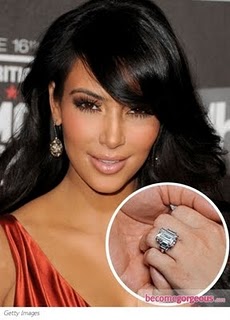
The most recent high-profile celeb engagement announcement has been between reality television superstar Kim Kardashian and New Jersey Nets basketball player Kris Humphries. The ring presented to the future Mrs. Humphries is a 16.5-carat emerald-cut center stone flanked by two 2-carat trapezoids. Now, we could take the “emerald” cut style as a personal preference of Kardashian or we could look deeper into the trend. What other mega celebrity and recently engaged movie star received an emerald cut sparkler? None other than Kate Hudson. Proposed to by rocker beau Matthew Bellamy, Hudson proudly displayed her emerald-cut diamond, flanked by two sparkling baguettes, to the entire nation on the Today Show.
Kate Hudson
Kim Kardashian

A major trend? Yes, given the star power of Kardashian and Hudson, it would seem so. So, how can a jeweler or designer capitalize on this bridal trend? A seeming downside is that the broad, open facets of the emerald-cut diamond means that any inclusion or discoloration will be particularly obvious, and most individuals do not have hundreds of thousands of dollars to spend for a flawless stone. However—carat for carat—an emerald cut stone is less expensive for a customer to buy and the extensive publicity about celeb emerald-cut diamonds, customers may be willing to increase their planned budget (the upside!).

So, this spring, brush up on this beautiful diamond cut to prepare for celeb-obsessed brides-to-be who will be inquiring about emerald cut diamond engagement rings. One beautiful example: this socially responsible and eco-friendly ring crafted by AnaKatarina Eco Gioielli.
AnaKatarina Eco Gioielli

SEO AND SOCIAL MEDIA: A PRIMER

Good vs. Evil, Light vs. Dark, Carbs vs. Lean Protein… all things that are essential and on going struggles to help find balance. Another recently evolving struggle that is creating a lot of buzz across the internet and business communities is the deliberation of Search Engine Optimization (SEO) vs. Social Media Networking for marketing purposes. The differences between the two are vast, but we often hear small businesses weighing one against the other in terms of where to invest. While SEO has a faster ROI rate on a website’s traffic than Social Media, a Facebook page with 100,000 ‘Likes’ and ongoing engagement has an amazing ROI as well. With that being said, let’s just get down to the brass tacks, nitty-gritty, and seedy underbelly about what these Internet marketing tactics offer.

SEO: WHAT IS IT?

What can be said? It predates the whole concept behind Social Networking, and is still vital to an overall marketing strategy regardless of what you’re promoting. What it is in Layman’s terms is basically search engine marketing: how to get your website to appear high in results when someone searches Google or another search engine.

First, there is pay for play SEO; you know that ‘suggestion box’ that comes up when you start typing in things to Google or Bing? Those brand names paid to be there; they also paid to be at the top of your search results or along the side in those ‘other search suggestions’ columns.

If you start typing things into Google, the Google Instant bar comes up and starts guessing what you’re typing. Unfortunately it searches just about the whole span of the Internet when you hit enter. That means that not only are you bombarded right off the bat with information that you don’t need, but then you see all these big name brands that you might not want.

Like all things we had to learn with the creation of the Internet was the thought process of navigating your search engine results. Depending on what I am searching for, I do not always look at the first link that comes up, in fact I don’t really look at the headlines that Google or Bing gives me, I look at the blurbs that are underneath them and if that information matches what I’m looking for then that is the site I want. Like everything else, people have different ways of navigating their search results, but most just haphazardly click where they see fit.

Because people are so consistent, they will continue to click one of those three links that come up, which means that those companies will clearly gain the most traffic to their website consistently. That is where SEO comes in, with keywords in your website copy, inbound links, and other things that help Google and other search engines rank your site higher. But the problem that too many companies over look is: once you get that traffic to your site, how do you engage and keep them there? (thus the argument in favor of focusing on social media)

SOCIAL MEDIA: TO ‘LIKE’ OR NOT TO ‘LIKE’?

What needs to be grasped about social media is the sheer volume and presence it all has. For example, just about everyone (500 million people, to be exact) has a Facebook profile used to interact with others in a different atmosphere than (crazy concept) speaking with them face-to-face or even over the phone. Side note: I had to find out through Facebook, twice, that a favorite cousin was getting married.

Now, the ever present Facebook, Twitter and the like have been emerging and growing faster and faster, have people really come to rely on them as a place to get new information? That answer might surprise you. Consider, for example, that Facebook has almost surpassed Google as the top visited site on the Internet.

The difference between Google and Facebook? (And, therefore, the difference between SEO outreach and social media outreach)… People go to Google when they want basic information or a phone number; people go to Facebook to form a long-term relationship with a brand.

The things you can do with a Fan Page on Facebook are essentially endless. But all have common ROI: an ongoing association with prospects and clients, and the creations of not just a visitor who clicks on your website once, but someone who becomes a brand ambassador.

SO WHICH IS BETTER?!

At the end of the day, there are different companies that can benefit from more SEO than Social Media, and vice versa. Both are completely different in their approach of finding new information and getting it to the public.

SEO and Social Media have their places, and greatly help each other. Without a search engine you can easily find out whether your favorite company had a social media presence on top of finding their website. Both feed off of each other and help give the other meaning. Essentially, both SEO and Social Media Marketing are good things to take part in, it all depends on the business and the marketing strategy you want to execute.

If your resources are limited, which to choose? When deciding, remember that people are using search engines to look for something that is in the moment; they want to find what they’re looking for fast and with little problems. When people are logging onto Facebook, they are looking to engage and connect… be it to see what their friends are doing, play games, or, increasingly: learn of news, promotions an updates from their favorite brands.